Hopscotch | Talbot Rice Gallery
Currently on show in the framework of the group exhibition:
Talbot Rice Gallery, Edinburgh, UK
The Children are Now 28 Oct 2025 - 07 Feb 2026
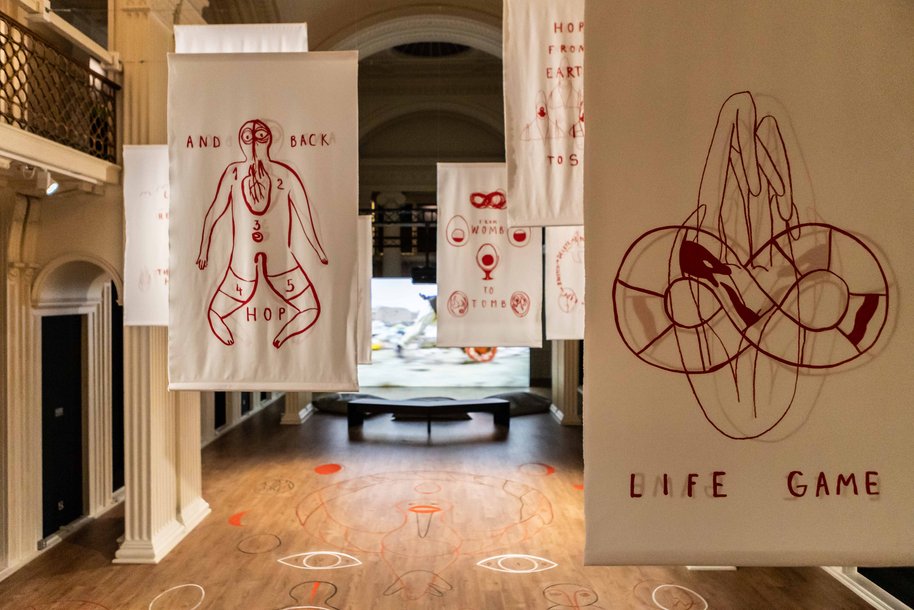
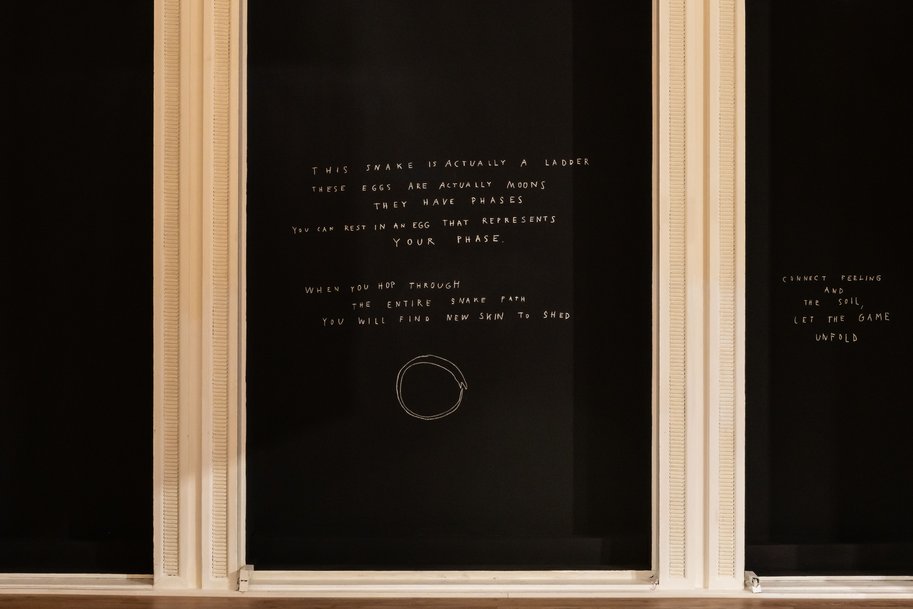
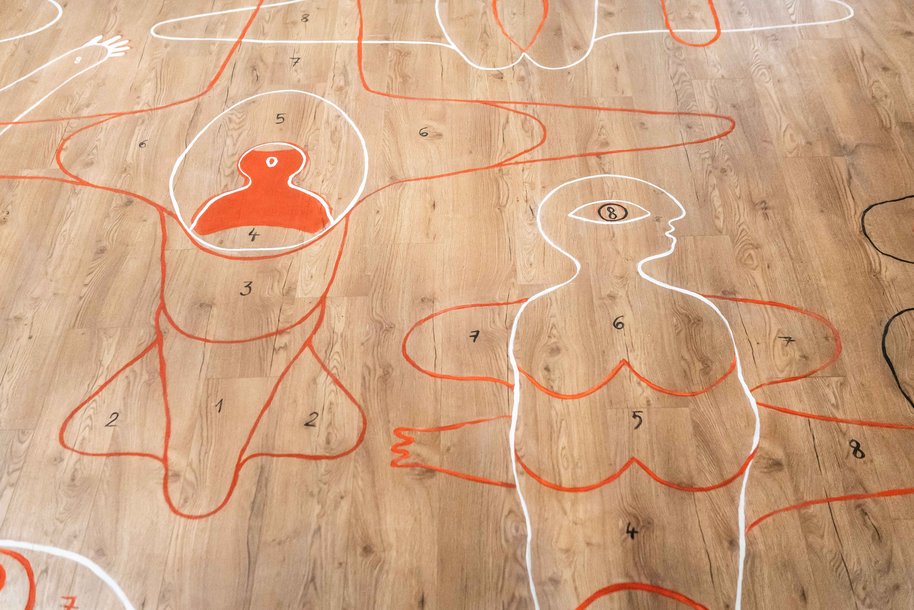
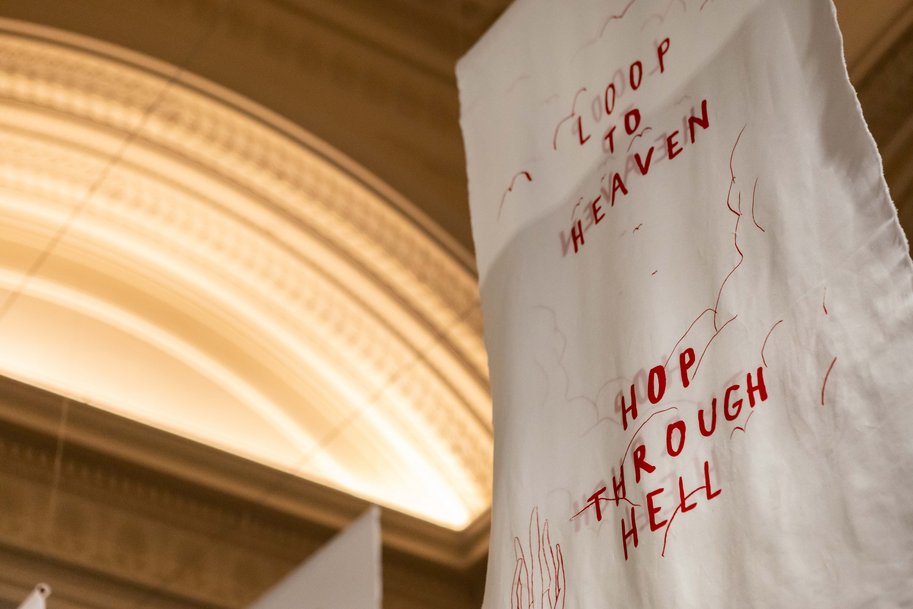
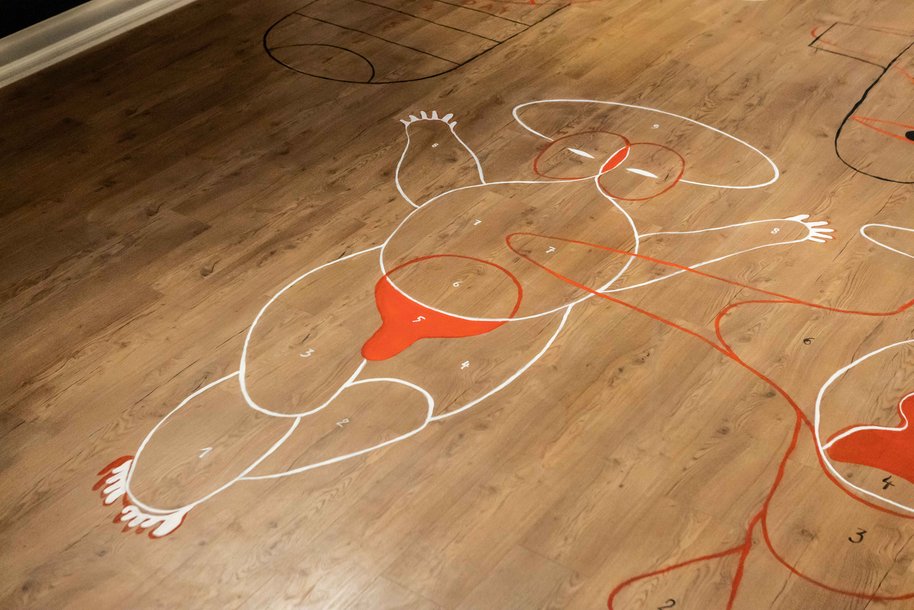
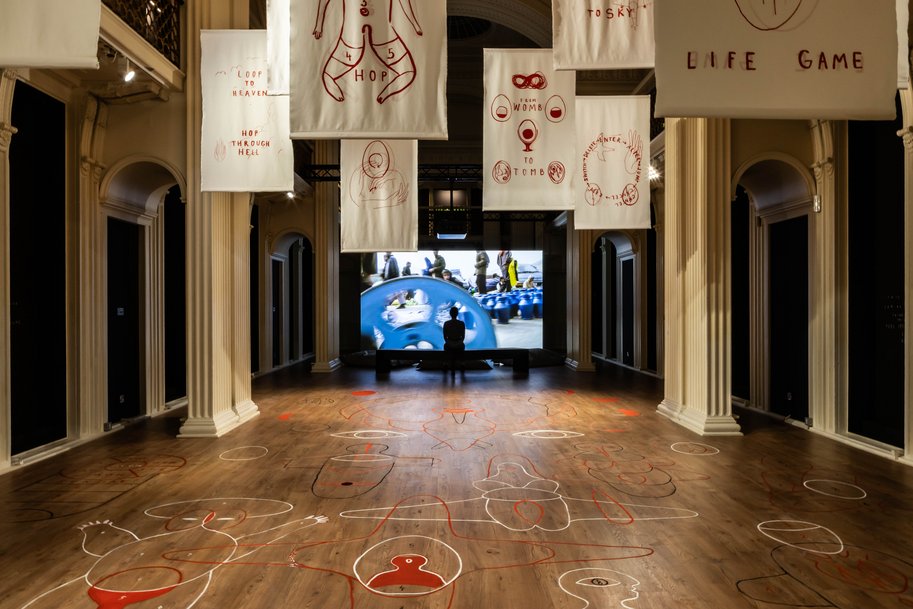
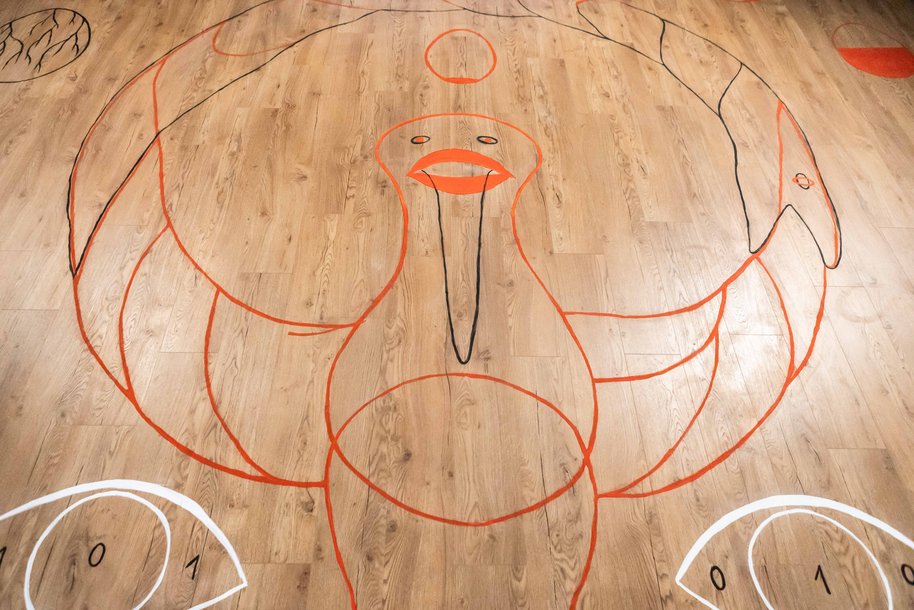
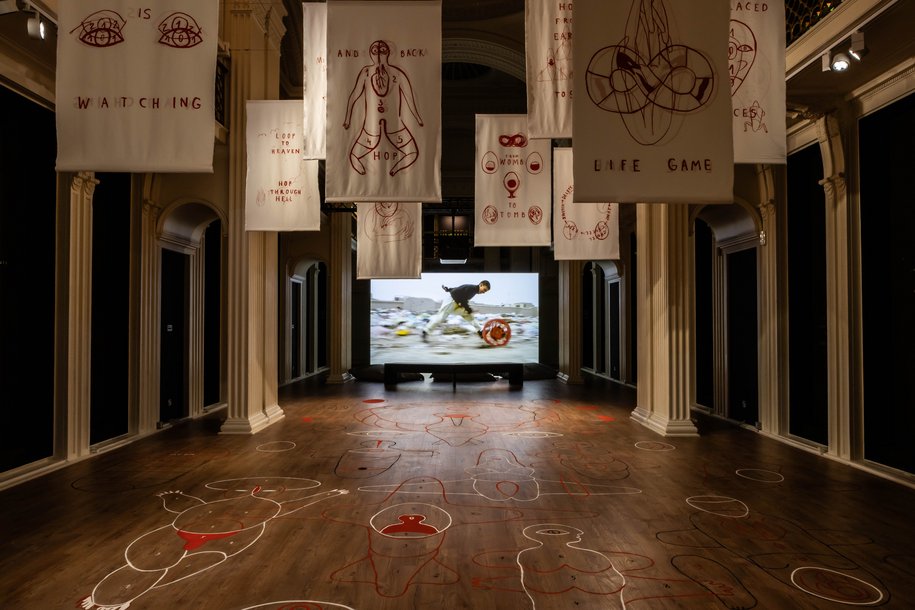
Adéla Součková's ritualistic drawing and printing practice seeks to reconnect people to the land through forms of play and embodiment, something directly linked to the children's game of hopscotch (where the scotch refers to a scratch made in the dirt). It is the enigmatic appearance of this game throughout different eras and world cultures that provides Součková with the rich source of ideas for this imaginative installation. Soucková is fascinated by the many forms hopscotches can take, and how they Link to a kind of shapeshifting story-telling practice that can be equally spiritual, profound and nonsensical. She was also motivated by hopscotches as a tool that can help people switch between different temporalities or world views: between the linear and rational, and the circular and relational. The uncertain and ambivalent history of hopscotch gives Součková the space to be playful in its presentation, speculating and experimenting with its origins and possibilities.
Brian Sutton-Smith's analysis of play (The Ambiguity of Play) argued that games are tied up with competing worldviews that centre on unreconcilable values: progress. fate, power, identity, the imaginary, the self and frivolity. And relatedly that they are assigned different functions for: adaptation, magic, status, co-operation, creativity, experience and play for play's sake. In Homo Ludens, Johan Huizinga famously argued that play is innate, that it precedes and underpins culture and that "life must be lived as play, playing certain games, making sacrifices, singing and dancing..... Součková's installation is intentionally open and cryptic, forcing people to embrace. adapt and invent their own games. Just as her guide uses prose-poetry to navigate the striking difference between describing a game and playing a game, she invites us to move between an understanding of hopscotch and losing ourselves in the mutating, happening, all-at-once-ness of play itself.
James Clegg